A practical marketing toolkit for Michigan Christmas tree retailers, built by Hope College researchers from a multi-year MCTA-funded research grant studying what brings Michigan families to one farm over another. Free, with no signup or membership required, whether you have five hours a year or fifty, start where you are.
Levels aren't about scale. They're about the time you have. Start at Level 1 and stay there, or climb when you're ready. Either way, you're building toward what brings nearly half of all Christmas tree customers in: a recommendation from a friend or family member.
A note on wording: we say "farm" throughout this toolkit as shorthand for any tree-selling operation, choose-and-cut, retail lot, or wholesale. If that's not quite your setup, read it as "business."
A note on AI: it can be tempting to just ask an AI tool to write your marketing for you. That's fine, even smart, once you've done the work here first. The clearer you are on which Level you're building toward and what makes your farm worth visiting, the better any AI tool's suggestions will be, and the more they'll actually sound like you.
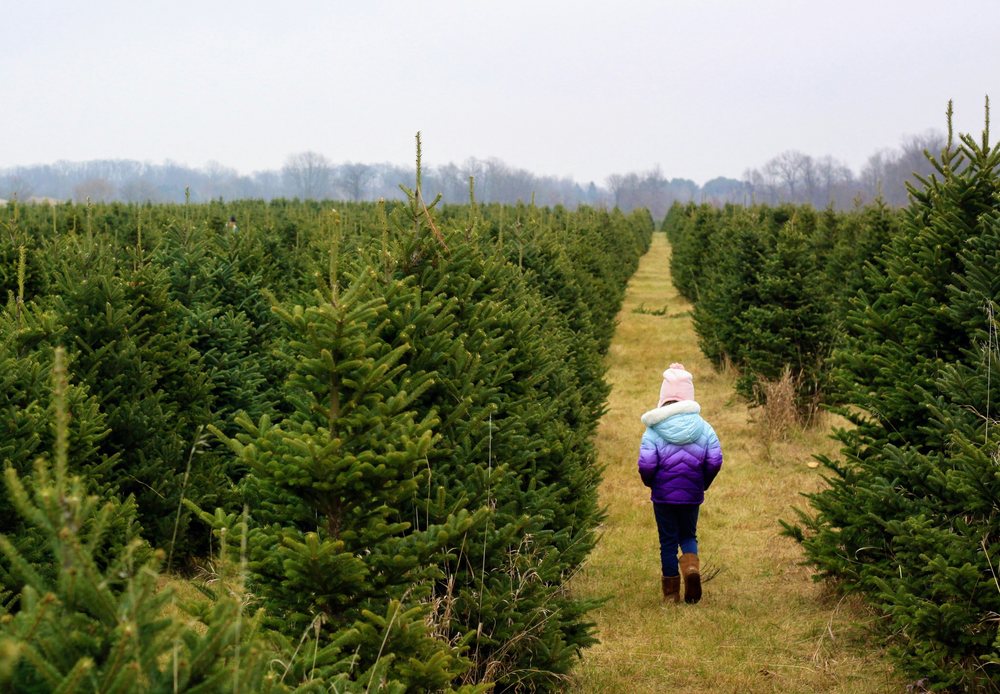
Level 1 · Starter
5–10 hrs/yr
Quick, foundational steps to help customers find you quickly and easily.
See Level 1 tools
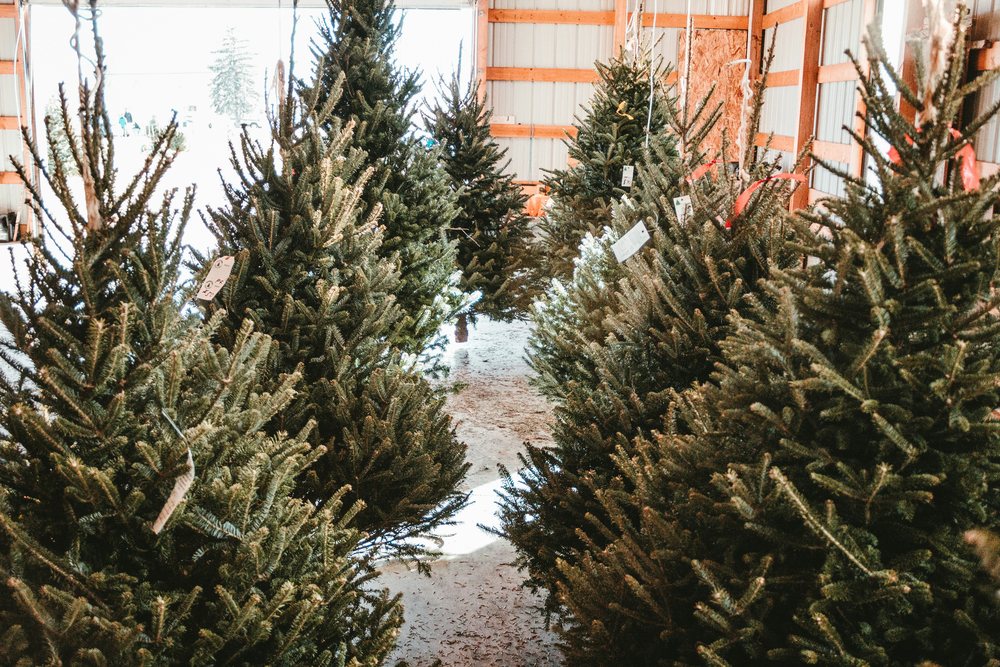
Level 2 · Builder
15–25 hrs/yr
A focus on building a more consistent presence so customers recognize your farm and know what to expect, season after season.
See Level 2 tools
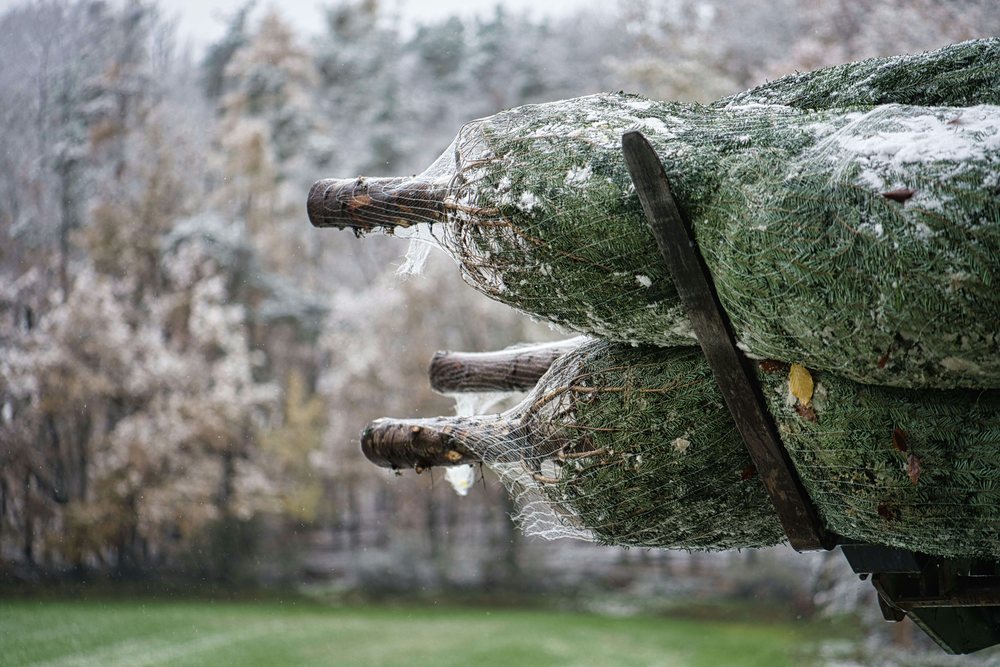
Level 3 · Leader
30–40+ hrs/yr
Guidelines to creating a more intentional, memorable experience that helps your farm stand out and keeps people coming back year after year.
See Level 3 toolsEvery worksheet you complete in one level becomes a building block for the next. Most of Level 1 takes under two hours and is done forever. Set it up now, before the season hits. Christmas tree farms have eleven months to prepare for one month of revenue; this toolkit is built around that calendar.
Choose based on how many hours you can realistically spend on marketing in a year, not on scale.
Each tool is a standalone worksheet, checklist, or template. Start with the "Start Here" checklist in Level 1.
Your story and your pricing sheet get written once and reused for years. Do it once, use it every year.
Move to the next level when your current one feels steady. There's no timeline. Give yourself a few seasons to settle in before you climb. The toolkit isn't going anywhere.
This toolkit comes from years of conversations with Michigan tree farmers: listening for pain points, testing what works, and stripping away anything that feels like "marketing speak."

Kevin has spent years walking Michigan tree farms and retail lots: sitting down with operators, watching how customers move through a sale, and figuring out what brings families back. He earned his PhD in International Business and Strategic Management at Washington State University, and has been engaged with the Christmas tree industry since 2021. Every page of this toolkit is shaped by what he's heard directly from operators: what sells a tree, what brings families back each December, what makes a small farm or lot unforgettable. Christmas trees run in the family, too: his father, Dr. Gary Chastagner of Washington State University, is a Fellow of the American Phytopathological Society and one of the most respected Christmas tree researchers in the country.

Lauren has been working with Michigan Christmas tree farms since 2023 on the part of the business that often gets shortchanged: the story. She earned her PhD in Organizational and Financial Communication at Purdue University, but her work here is in plain language: helping farms put words to the generational family history, the wreath-making traditions, the reason customers drive an hour past three other farms to visit yours. She turns big marketing ideas into steps that fit around chore lists, packed weekends, and a season that's over before you know it.
Want to dig into the research behind the toolkit? Read more on the About page →
Evergreen Growth is the deliverable from a multi-year Hope College research grant, funded by the Michigan Christmas Tree Association, studying Michigan Christmas tree retailers and the consumers who shop with them. Below: who built it, what we've learned so far, and where to find the underlying work.
Kevin has spent years walking Michigan tree farms and retail lots: sitting down with operators, watching how customers move through a sale, and figuring out what brings families back. He earned his PhD in International Business and Strategic Management at Washington State University, and has been engaged with the Christmas tree industry since 2021. Every page of this toolkit is shaped by what he's heard directly from operators: what sells a tree, what brings families back each December, what makes a small farm or lot unforgettable. Christmas trees run in the family, too: his father, Dr. Gary Chastagner of Washington State University, is a Fellow of the American Phytopathological Society and one of the most respected Christmas tree researchers in the country.
Lauren has been working with Michigan Christmas tree farms since 2023 on the part of the business that often gets shortchanged: the story. She earned her PhD in Organizational and Financial Communication at Purdue University, but her work here is in plain language: helping farms put words to the generational family history, the wreath-making traditions, the reason customers drive an hour past three other farms to visit yours. She turns big marketing ideas into steps that fit around chore lists, packed weekends, and a season that's over before you know it.
Findings are drawn from a statewide consumer survey that was built on themes from focus groups with Michigan consumers, with additional context from conversations with growers across the state.
Hover any finding to see the supporting data.
73.7% of households in our sample displayed an artificial tree last year; only 16.1% displayed a real one (6.0% had no tree, 4.1% something else). Across the full sample, 70% report being satisfied or very satisfied with their most recent tree. New real-tree buyers are most likely to come from households that would add a real tree to an existing tradition, not households swapping artificial out altogether.
35% of real-tree buyers learned about their farm from family, 12% from friends, 12% from online search, 10% from a billboard, and 8% from Facebook. Family and friend recommendations together drive nearly half of discovery, more than every paid channel combined.
39% of real-tree buyers purchased from a choose-and-cut farm. 20% bought from a corner lot, 16% from a nursery, 14% from a big-box store, and 10% from a farmers market. Real-tree retailers compete with at least three different channel types for the same customer, and the tree itself is rarely the deciding factor.
71% of real-tree buyers traveled under 30 minutes (24% under 10 minutes; 47% between 11 and 30). Another 27% traveled 31–60 minutes. Almost no one travels more than an hour. Outreach pays off most when concentrated within the local radius.
49% of real-tree buyers spend 11–30 minutes on site, 27% spend 31–60 minutes, and 10% are in and out in under 10. For most customers, the entire on-farm experience, arrival to checkout, happens in roughly a half hour. That's the window every "moment that matters" has to land in.
Across eight focus groups (32 participants), four themes appeared repeatedly: nostalgia (childhood memories shaping adult preferences), family tradition (the ritual of picking, cutting, and decorating together), the growing hassle of a real tree as people age (setup, transport, and disposal becoming harder to justify each year), and a cost-vs-experience trade-off (species, freshness, and price weighed against what the visit is worth). A minor thread: a few participants raised the environmental benefit of a real tree, though the survey later found this rarely drives actual switching.
This is a direction for future research, not a measured result from this study. The idea: buyers move through phases, those new to real trees (young families starting traditions), those actively in the tradition, those approaching the end (empty-nesters who may step away), and those who could return (the kids are now visiting with grandkids). Most marketing reaches only the active middle group.
The complete statewide survey report (~60 pages): methodology, every result, and the full statistical detail behind the findings summarized throughout this toolkit. Email us and we'll send a copy.
Request a copy →A shorter, plain-language version of the findings (11 pages), built for operators who want the takeaways without the statistical detail.
Download the report →"Evergreen Growth": the presentation given at the MCTA Summer 2026 Conference, covering the headline findings from the statewide survey.
Download the deck →Questions about the research, ideas for the toolkit, or interest in being part of future studies? Email us directly. Both inboxes are checked regularly.
All interactive, all designed to be filled in, reused, and shared.
A starting frame, from the research: about a third of the people currently buying an artificial tree are already open to a real one. Nothing below is built to change anyone's mind. It's built to give people who are already leaning your way a concrete reason, and an easy way, to act.
Five moves every farm should have in place. Check them off. The progress bar tracks you.
A step-by-step walkthrough to get your farm showing up on Google Search and Maps. Copy-paste-ready business description inside.
Five-step guide to a simple, single-page farm website using Wix. Includes the exact sections to add and what to write in each.
The four moments of a customer visit (before, arrival, during, exit), with a checklist for each to remove friction at every step.
Answer three simple prompts. Watch your farm's story come together: a 2-3 sentence paragraph you can paste on your website, Facebook, and Google.
Your hours, your location, and the basics are easy to find. Word of mouth and passive discovery (driving by, seeing a sign) bring in most real-tree buyers in our survey data, and new buyers, especially, are anxious about the practical side once they've found you. Level 1 answers every one of those questions before they become a reason not to come.
See your farm the way visitors do, phase by phase. Spot where customers slip through the cracks.
Ready-to-print template to collect names, emails, and "how did you hear about us?" at checkout. Minimum effort.
Three ready-to-send emails: Seasonal Kickoff, We're Open!, and End of Season. Fill in your business name and send.
Four plug-and-play incentive programs: "Bring a friend," social tag-to-win, loyalty discount, and customer profile. Pick one and go.
Choose a tone, a color, and a description, then use them everywhere. Consistency is what makes a farm recognizable.
Printable tally sheet for the register. Track where visitors actually come from, season after season, so you focus your effort where it works.
You'll have a customer list you own, a consistent look everywhere customers see you, and families who plan their next visit before they leave, and nearly half of all Christmas tree buyers find their farm through a recommendation from family or friends.
Define your "why," your brand promise, and your positioning. Use it to guide every marketing decision you make, big or small.
Map your farm flow from entrance to exit. Identify confusion points, add-on opportunities, and the "moments that matter" you want visitors to remember.
Social media templates, direct mail samples, billboard examples, and journalist outreach, built around your relationships with the community.
A playbook of partnership ideas with local coffee shops, bakeries, churches, and boutiques, with outreach scripts for each.
Month-by-month checklist across pre-season, in-season, and post-season. Never wonder "what should I be doing right now?" again.
Your farm has a documented brand, a PR playbook, and partner relationships that bring in new customers every season. Real-tree buyers rate the authenticity of their experience far higher than artificial-tree owners do (4.3 vs. 2.5 out of 5 in our survey data), and 71% travel 30 minutes or less to get one. The experience is the product, and Level 3 is how you design it on purpose.